

societal improvement : ค้นหาหนังสือธรรมะ
หน้าหนังสือทั้งหมด
121
The Four Virtues of Self-Improvement
2. Self-improvement (Dama)
"The second virtue is to always improve oneself. I kept
improving myself professionally. From an ignorant person, I
kept advancing myself until I was able to be a good provi
In this chapter, the author discusses the essential virtues for self-improvement and personal growth. The second virtue emphasizes the importance of continuous self-enhancement, maintaining profession
118
Truth for the Family: Dhamma Teachings
Part Five: Truth for the Family
about Dhamma and learned that there was a set of teachings
specifically tailored for householders. They include four
main virtues, which are:
1. Truthfulness (sacca): T
Part Five discusses essential virtues for householders taught in Dhamma, emphasizing truthfulness, self-improvement, and enduring hardships. Truthfulness (sacca) encourages honesty and accountability,
121
The Four Virtues of Self-Improvement
2. Self-improvement (Dama)
“The second virtue is to always improve oneself. I kept improving myself professionally. From an ignorant person, I kept advancing myself until I was able to be a good provi
This text discusses the four virtues that foster personal development. The first virtue emphasizes continuous self-improvement to advance one's career and resist vices. The second virtue focuses on en
128
Mappings with a Dharma Master
Mappings with a Dharma Master
we first start with our own individual self and then work outward in all directions.
“The six directions start with the smallest unit, ourselves. We are in the center o
The text discusses the importance of individual self-awareness and ethical behavior in shaping relationships and society. It emphasizes that one must start with self-improvement through meditation and
212
Journey to Joy
Journey to Joy
212
are youths who are instilled with hope despite
being pressed by wounds of society.
I think the fact that my mind is open to
considering new ideas is a positive asset to my
work. By
The text emphasizes the importance of fostering hope among youths who face societal challenges. By adopting an open mindset, educators can guide students to balance their thoughts and relationships wi
132
The Reality of Life: Understanding Our Defilements
Suzanne Jeffrey
The Reality of Life: We get this picture from our parents. Our birth is the most critical time, and the weakest time, of our life. Because the four elements are impure, we realize tha
In 'The Reality of Life,' Suzanne Jeffrey delves into how our early upbringing shapes our understanding and actions. The text emphasizes how our birth is a vulnerable point characterized by defilement
13
The Root of Social Problems
THE ROOT OF SOCIAL PROBLEMS
T HE ROOT OF SOCIAL PROBLEMS
M any blame the scarcity of lasting happiness on the disarray of modern culture. Family breakdown, violent crime, suicide, deterioration of e
This text discusses how many societal issues, such as family breakdown, crime, and education deterioration, stem from the neglect of our own minds. It argues that the quality of our minds significantl
25
The Four Problems in Marriage
Part One: Family Life
These are: Truthfulness (Sacca), Self-Control (Dama),
Endurance (Khanti), and Sacrifice (Caga). When lacking in
any of these principles, conflict or discord will arise in any
hum
Part One: Family Life highlights four essential principles for maintaining healthy relationships: Truthfulness (Sacca), Self-Control (Dama), Endurance (Khanti), and Sacrifice (Caga). Conflict within f
11
10 Pearls of Inner Wisdom
10
Pearls of Inner Wisdom
1.Our Goal
The most important thing,
wherever you are,
is not to neglect
your meditation practice.
Don't let
your purpose in life²
slip away.
We made the decision
to follow t
This text emphasizes the importance of maintaining a regular meditation practice as a path to achieving enlightenment. It encourages individuals not to let their purpose in life slip away and to medit
35
The Noble Eightfold Path for Successful Trainers
CHAPTER 4
BEGINNING TO BE A SUCCESSFUL TRAINER
THE NOBLE EIGHTFOLD PATH
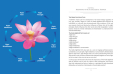
A definitive master plan for development of all human beings regardless of race, age, sexuality, religion or creed, the Noble E
This chapter outlines the Noble Eightfold Path as an essential framework for trainers committed to personal and professional development. Each of the eight principles—right view, thought, speech, acti
9
When the Sun Sets
lay community which they had to honour, principally
teaching. Town monks were always in the public eye, and
instead of being enticed by the temptations of the outside
world, often found themselves for
In this chapter, we delve into the significant literary themes that emerge during the twilight hours. The sunset symbolizes endings and reflections, creating a unique atmosphere that writers often emp

60
4 Self เพื่อการพัฒนาตนเอง
๗๐
ทันโลกทันธรรม
เรื่อง : พระมหาสมชาย ฐานวุฑโฒ (M.D., Ph.D.) จากรายการทันโลกทันธรรม ออกอากาศทางช่อง DMC
4 Self
เพื่อการพัฒนา
ตนเอง
อยู่ให
วันนี้เราจะมาศึกษาเรื่อง 4 Self เพื่อการ
พัฒนาตนเอง ปัจจุบันมี
เรื่อง : พระมหาสมชาย ฐานวุฑโฒ (M.D., Ph.D.) จากรายการทันโลกทันธรรม ออกอากาศทางช่อง DMC 4 Self เพื่อการพัฒนา ตนเอง อยู่ให วันนี้เราจะมาศึกษาเรื่อง 4 Self เพื่อการ พัฒนาตนเอง ปัจจุบันมีหลักในการพัฒนาตัว
24
Dhamma for Laypersons and the Four Levels of Beauty
A person who has the Dhamma for Laypersons
(Gharāvās-dhamma) must display four regular habits:
1. Habit of Responsibility – Whatever the task at hand, he must do it to the best of his ability, in t
A person who follows the Dhamma for Laypersons exhibits four habits: responsibility, self-training, endurance, and sacrifice. These traits ensure self-reliance and leadership within families. In marri
91
The Journey of Self-Improvement and Patience
Suzanne Jeffrey
ample, of sitting for long periods of time in meditation. We must also be patient toward
the imperfection of others. And we must practice this. Why? Because this helps us
correct the
In this enlightening text, the author reflects on the journey of self-improvement over a span of thirty-nine years under the guidance of Luang Por Dhammajayo. Through meditation, the author addresses
7
The Role of Buddhism in Society and Unity among Traditions
Digested from speech of Most Ven. Daijyo Nakajima
Abbot of Honryuji Temple / Nichiren-Sye Order
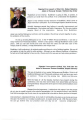
"Buddhism is from internal. Buddhism is going to help, to protect, to prevent our world from the conflic
The speeches of Most Ven. Daijyo Nakajima and Most Ven. Trish Han Tan highlight the significance of Buddhism in fostering peace and addressing societal challenges. Nakajima emphasizes Japan's civiliza
96
Understanding Merit and the Law of Cause and Effect
Merit Results
We benefit from merit in four levels:
1. The mind -- improving the quality and the potentiality of the mind.
2. The personality -- improving our demeanor and the way we project oursel
Merit affects our lives on four levels: mental improvement, personality enhancement, lifestyle benefits, and societal contributions. The Law of Karma states every action has a corresponding consequenc
108
The Sin of Soliciting Prostitutes
"Mukha" means face, form or gateway.
So Apāyamukha means a gateway to deterioration,
disaster and damage.
Any man, single or married, who solicits a prostitute, no
matter under what circumstances, has
This text discusses the concept of 'Apāyamukha' as a gateway to moral decline and societal problems related to soliciting prostitutes. It highlights the consequences such as the risk of AIDS, disgrace
137
The Importance of Teaching the Five Precepts to the Younger Generation
can we expect the younger generation to see the importance
of observing the precepts? This unfortunate situation has led
more people to disregard the precepts until ignorance has
become the norm. And
This text discusses the declining observance of the Five Precepts among younger generations, attributing it to a lack of home guidance. Consequently, societal ills such as brawling and drug abuse aris
139
The Importance of the Five Precepts in Society
4. We shall not lie, utter profanity, speak nonsense, or
use divisive words.
5. We shall not consume intoxicants such as addictive
drugs and alcohol.
These Precepts are needed to keep peace on earth.
The Five Precepts serve as fundamental guidelines for maintaining peace on earth. Originating before Buddha, they measure human behavior: full adherence results in complete humanity, while deviating r
142
Acts of Self-Discipline: Understanding the Five Precepts
Part Five: Truth for the Family
Chapter 25
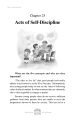
Acts of Self-Discipline
What are the five precepts and why are they
important?
"The rules to live by" that good people universally
adhere to are known in as
In Chapter 25, 'Acts of Self-Discipline,' the importance of the Five Precepts is discussed as essential guidelines for living ethically. Many young people today overlook these codes, viewing virtuous